Wild Up: The Great Learning

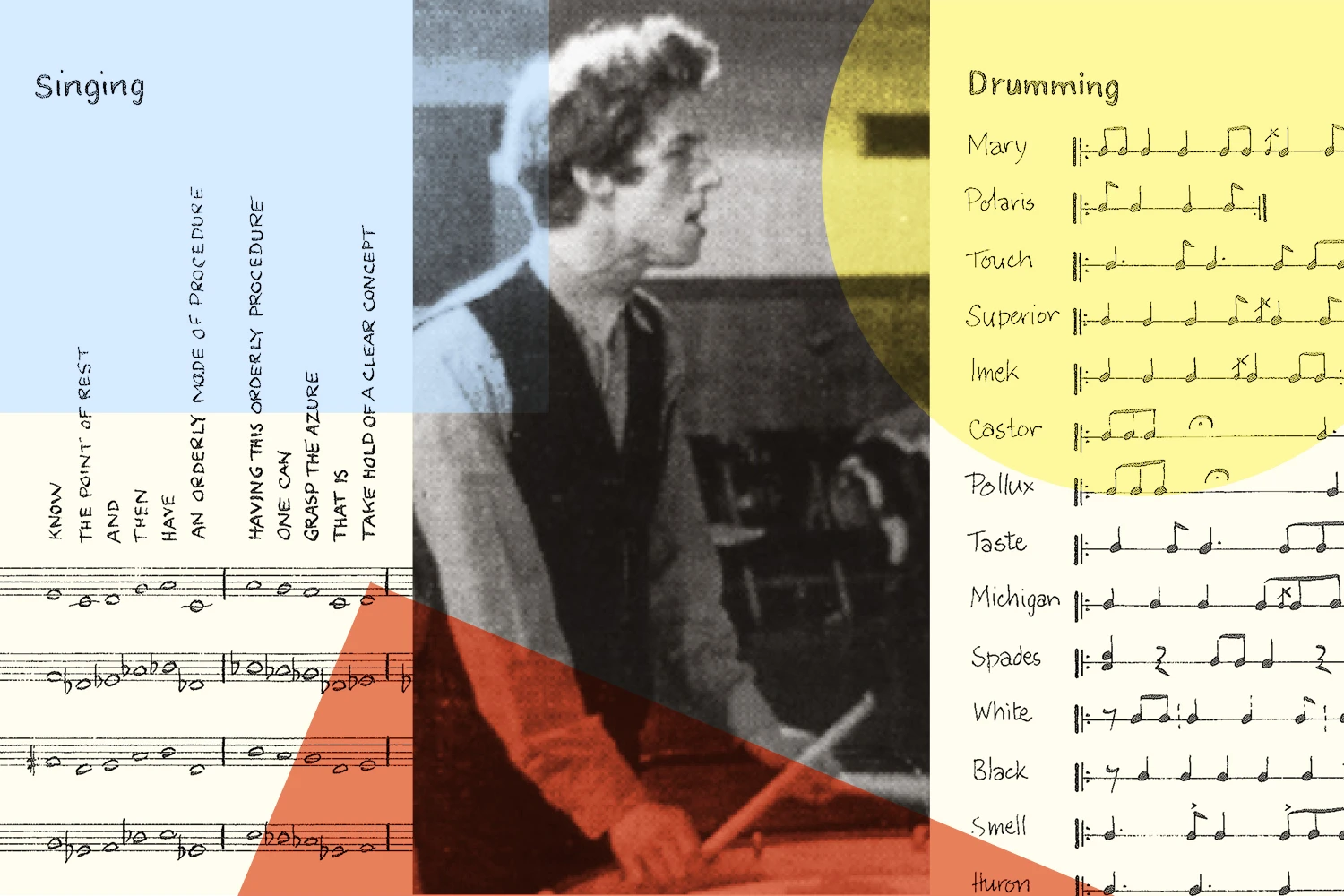
Photo of Cornelius Cardew; Excerpts of the handwritten score of Cardew's The Great Learning
Know Before You Go
Some seating, including designated accessible seating, is available. However, the audience is encouraged to move freely throughout the lobby and first floor galleries as the performance progresses.
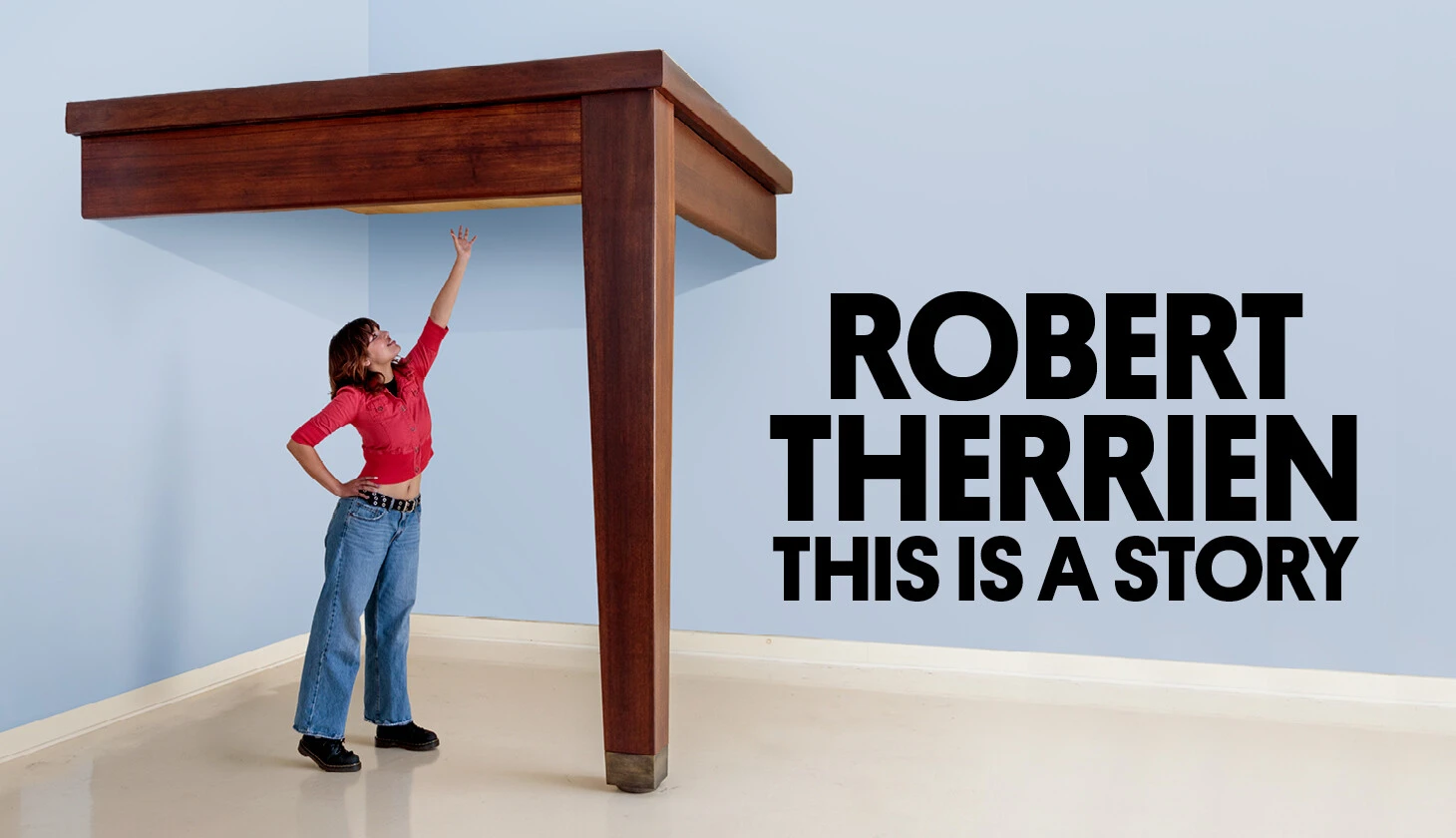
Tickets to this event include access to Robert Therrien: This is a Story during the event.
Tickets to this event do not include access to Yayoi Kusama’s Infinity Mirror Room—The Souls of Millions of Light Years Away (2013), which must be booked separately. The museum’s third floor rotating collection galleries and The Shop at The Broad will be closed during this event.
To learn more and plan your trip, visit Know Before You Go & FAQ. Visitor policies are subject to change.
Schedule
8 – 9 pm: First performance (SOLD OUT)
10 – 11 pm: Second performance
Bios
WILD UP
Called “a raucous, grungy, irresistibly exuberant…fun-loving, exceptionally virtuosic family” by The New York Times, Wild Up has been lauded as one of new music’s most exciting groups by virtually every significant institution and critic within earshot. Artistic Director Christopher Rountree founded the orchestral collective in 2010 to challenge traditional concert practices by experimenting with diverse methodologies, approaches, and contexts.
After a decade and a half of rampant creativity and curiosity, Wild Up is the ambassador of West Coast music. The group has collaborated with a wide range of composers, performers, and cultural institutions, premiering and creating hundreds of new works. They partnered with the LA Phil and REDCAT to present a two-months long festival and gallery exhibition, To The Fullest: The Music of Arthur Russell and Julius Eastman, accompanied Björk at Goldenvoice’s FYF Fest, sung into a Picasso with Pamela Z at LACMA, and created Democracy Sessions—playing against growing autocracy with Raven Chacon, Ted Hearne, Chana Porter, Ursula K. LeGuin, Harmony Holiday, Saul Williams, and Karlheinz Stockhausen at MOCA. They premiered David Lang and Mark Dion’s Anatomy Theater at LA Opera, often collaborated with the Martha Graham Dance Company, and performed scores for Under the Skin by Mica Levi and Punch-Drunk Love by Jon Brion at the Regent Theater and Ace Hotel. They were booed out of Toronto for playing a piece too quietly. Wild Up premiered a new opera by Julia Holter at National Sawdust, debuted an avant-pop work by Scott Walker at Walt Disney Concert Hall, sustained 12 hours of Ragnar Kjartansson’s Bliss at REDCAT, and championed Julius Eastman’s music worldwide. They blared a noise concert as fanfare for the groundbreaking of Frank Gehry’s building on Grand Avenue and First Street. The group has been lavished with praise by The New York Times, The Wall Street Journal, Los Angeles Times, The New Yorker, The Washington Post, NPR, Pitchfork, and many more publications and critics.
Their decade-long, critically acclaimed, multi-GRAMMY nominated Julius Eastman Anthology has been celebrated as “A masterpiece.” (New York Times) “instantly recognizable” (Vogue) and “singularly jubilant ... a bit in your face, sometimes capricious, and always surprising” by NPR who named the anthology’s first installment, Julius Eastman Vol. 1: Femenine, among the top ten records of 2021 in all genres.
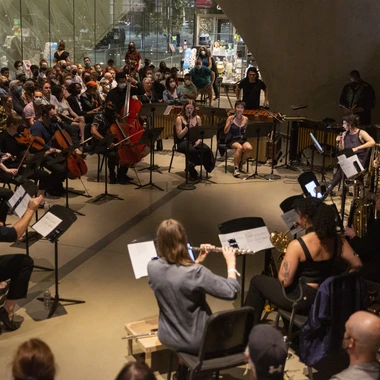
Photo by Ian Byers-Gamber. Wild Up perform Femenine by Julius Eastman at The Broad, July 23, 2022
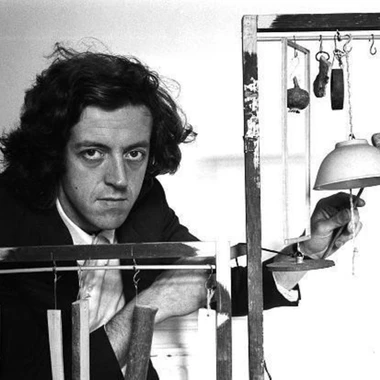
Cornelius Cardew
Cornelius Cardew (1936 - 1981) was born in Gloucestershire, England in 1936. He was a charismatic and controversial figure whose contributions in the areas of musical notation, improvisation, and political music are widely recognized.
In the mid-fifties he worked with Stockhausen, collaborating on Carre, and introduced the music of the American composers John Cage, Morton Feldman, Christian Wolff, Terry Riley, and particularly LaMonte Young to European audiences. His experiments in musical notation culminated in two mammoth works—Treatise and The Great Learning—both of which, in different ways, bear witness to his astonishing invention and originality in this field. The spontaneity and improvisatory quality of his own music and music-making set him apart from both the American and the European avant-garde.
In the sixties Cardew became a focal figure, attracting around him a variety of musicians, including non-professionals, fine artists and jazz performers, and he turned principally to collaborative music-making—in the AMM free improvisation group and in the unique London-based Scratch Orchestra which he founded with Michael Parsons and Howard Skempton in 1969.
By the early seventies, the social aspect of his musical activity, so far libertarian and anarchist, took on a more precise, political definition with his opposition to U.S. and Soviet Imperialism and to British rule in Ireland. As a communist, he now repudiated as politically regressive much of the avant-garde of which he had been part. During the last ten years of his life, a period of intense political activity, he wrote music based on traditional and political songs, mostly for piano, in a romantic-realist style, aiming it towards a wider audience and within a political context.
On December 13th, 1981, in suspicious circumstances, he was killed by a hit-and-run driver, who was never apprehended, near his home in Leyton, London.